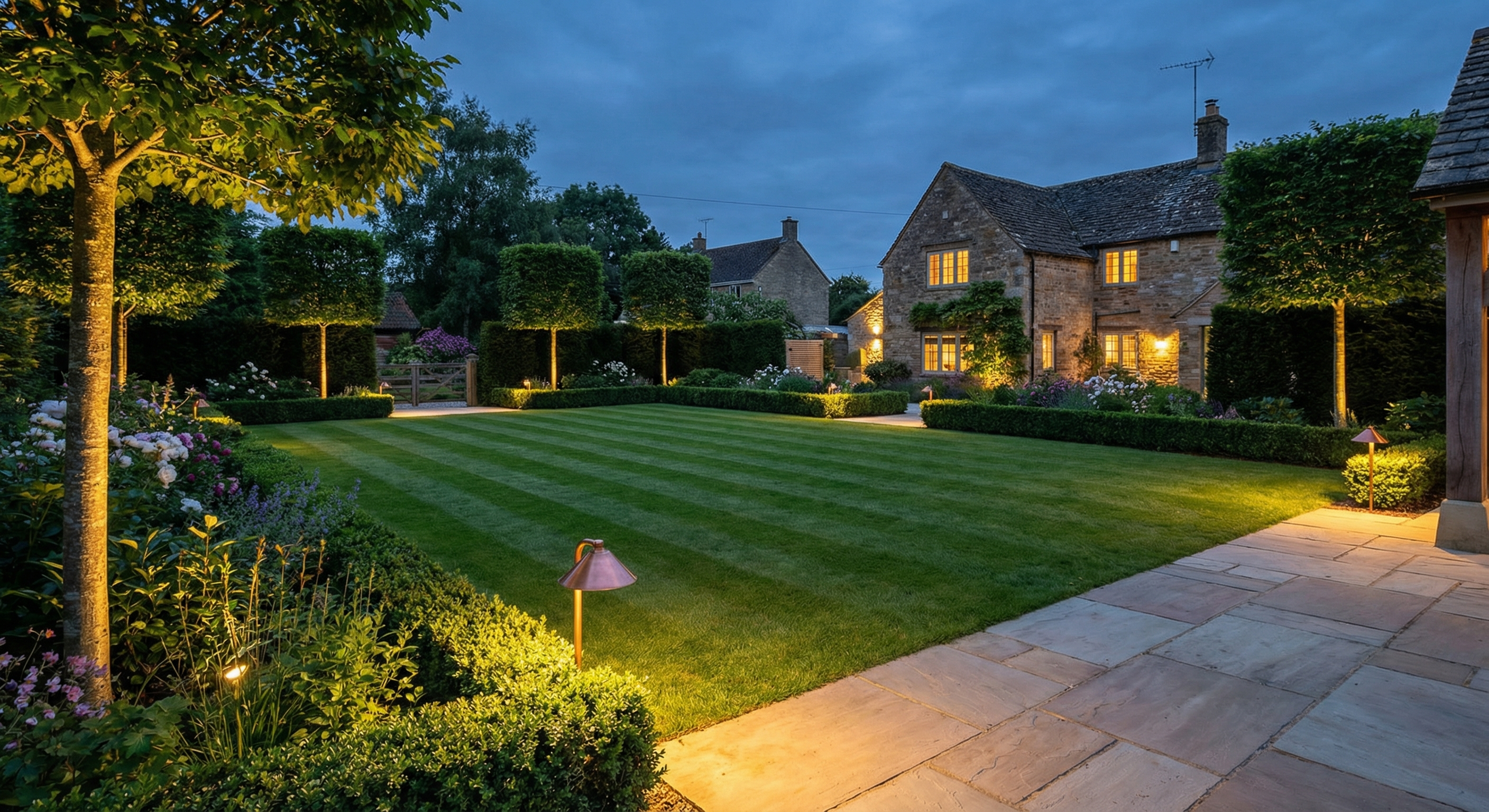
If you're a landscaper relying solely on word of mouth, you're missing out on a huge chunk of potential work. The homeowners who want patios, garden redesigns, and driveways are searching online every single day — and if they can't find you, they're finding your competitors instead.
Here's what actually works for landscapers who want a full diary in 2026.
1. Set Up and Optimise Your Google Business Profile
When someone searches "landscaper near me" or "garden designer in [your town]," Google shows a map with three local businesses. That's your Google Business Profile, and it's the most important free marketing tool you have.
To get the most from it:
- Fill in everything — services, service area, business hours, a proper description of what you do
- Choose the right categories — "Landscaper" as primary, then add "Garden designer," "Paving contractor," or "Fence contractor" as secondary categories depending on your services
- Post regularly — share completed projects, seasonal offers, or tips. Google rewards active profiles with better visibility
- Upload photos every week — more on this below
For landscapers especially, your Google Business Profile photos are gold. A stunning patio job or a garden transformation does more selling than any description ever could.
2. Get Reviews — and Make Them Visual
Reviews are essential for any trade, but landscaping has a unique advantage: your work is visual. Encourage customers to include photos when they leave a review. A five-star review that includes a photo of the finished garden carries ten times more weight than text alone.
Here's how to get more reviews:
- Ask at the right moment — when the customer is standing in their newly finished garden looking delighted, that's the time
- Send a follow-up text with a direct link to your Google review page
- Respond to every review — thank people for positive ones, and address negative ones professionally
- Make it part of your process — every job ends with a review request, no exceptions
Aim for at least 30 reviews with photos. That sets you apart from every landscaper in your area who has five reviews and no images.
3. Build a Website With a Proper Portfolio
This is where landscapers have a massive advantage over most other trades. Your work is inherently visual. A bathroom fitter can show a nice bathroom, but a landscaper can show jaw-dropping garden transformations that stop people scrolling.
Your website needs:
- A portfolio or gallery page — before-and-after shots organised by project type (patios, driveways, planting schemes, full garden designs)
- Clear service descriptions — don't just say "landscaping." List everything: patio laying, fencing, turfing, garden design, driveway installation, decking, artificial grass
- Your service area — be specific. "Covering Surrey, South London, and Kent" tells Google and customers exactly where you work
- Contact details on every page — phone number, email, and a simple enquiry form
A hand-coded landscaper website built with SEO in mind will massively outperform a basic template site. Custom code loads faster, ranks better on Google, and lets you showcase your portfolio the way it deserves.
4. Optimise Your Checkatrade Profile
If you're on Checkatrade, make sure your profile is actually working for you:
- Link to your website — profiles with a website link get more engagement
- Upload your best project photos — at least 15-20 high-quality images
- Keep your services specific — "Patio installation," "Garden design and landscaping," "Driveway laying" rather than just "Landscaping"
- Respond to every review — it signals professionalism and keeps your profile active
Checkatrade is a useful lead source, but it works best when paired with your own website. A customer who sees your Checkatrade profile and then visits your website to see a full portfolio is far more likely to get in touch.
5. Nail Your Local SEO
Local SEO is about showing up when people in your area search for landscaping services. Beyond your Google Business Profile, here's what to do on your website:
- Create location-specific pages — "Landscaper in Guildford," "Garden designer in Kingston," "Patio builder in Croydon." Each page targets a different area you cover
- Use the search terms people actually type — "garden design near me," "patio builder," "landscaper near me," "driveway installation [town]"
- Get listed in local directories — Yell, Thomson Local, FreeIndex, Bark. Make sure your name, address, and phone number are consistent everywhere
- Write blog content targeting local searches — "Best low-maintenance gardens for Surrey homes" or "How to choose paving for a sloped garden"
The more specific your content, the more Google understands what you do and where you do it.
6. Use Instagram and Social Media Properly
Here's a truth that landscapers need to hear: Instagram is your best social media platform, bar none. Landscaping is visual work, and Instagram is a visual platform. It's a perfect match.
What to post:
- Before-and-after reels — these get incredible engagement. Film a quick clip of the empty garden, then the finished result
- Time-lapse videos — set up a phone to record a patio being laid. People love watching transformations
- Project walkthroughs — talk the viewer through a completed garden. What the client wanted, what you did, what materials you used
- Behind-the-scenes content — loading the van, laying the first slab, the team at work
Post consistently — three to five times a week. Use local hashtags like #SurreyLandscaper or #GardenDesignLondon. Tag your location on every post.
Facebook is worth maintaining too, especially for joining local community groups where people ask for landscaper recommendations.
7. Run Google Ads Strategically
Google Ads can get you leads immediately, but landscaping has seasonal patterns you need to respect:
- Push hard in spring — February through April is when homeowners start thinking about garden projects. Increase your ad budget during this window
- Target high-value keywords — "garden design," "patio installation," "landscaper near me" are all high-intent searches
- Use your website as the landing page — sending ad traffic to your landscaper website with a proper portfolio converts far better than sending it to Checkatrade where they'll see your competitors too
A well-run ad campaign during the spring rush can fill your diary for the entire summer.
8. Seasonal Marketing
Landscaping is seasonal, and your marketing should be too:
- January-March — push garden design consultations and early-bird booking offers
- April-June — focus on patios, decking, and full garden makeovers
- July-September — fencing, artificial grass, driveways
- October-December — garden maintenance packages, winter tidy-ups, planning for spring
Send an email or text to past customers at the start of each season. A simple "Spring is coming — want to freshen up the garden?" reminder can generate repeat work.
9. Build a Referral System
Happy customers are your best salespeople. Make it systematic:
- Leave business cards at every completed job
- Offer a referral incentive — £50 off their next project for every customer they send your way
- Ask directly — "If any of your neighbours fancy something similar, send them my way"
- Follow up after a month — check the plants are settling in. It shows you care, and keeps you front of mind
The Bottom Line
Landscaping is one of the most visual trades out there, and that's a huge marketing advantage. A strong online presence — your Google Business Profile, a website with a stunning portfolio, active social media, and good reviews — will keep your diary full year-round.
The landscapers who stay busy don't wait for the phone to ring. They make sure customers can find them, see their work, and get in touch easily. That starts with getting your digital presence right.

Is Your Website Winning You Work?
21 practical checks across 5 categories. Score yourself and see where you stand — takes 5 minutes.
Get the Free Checklist →