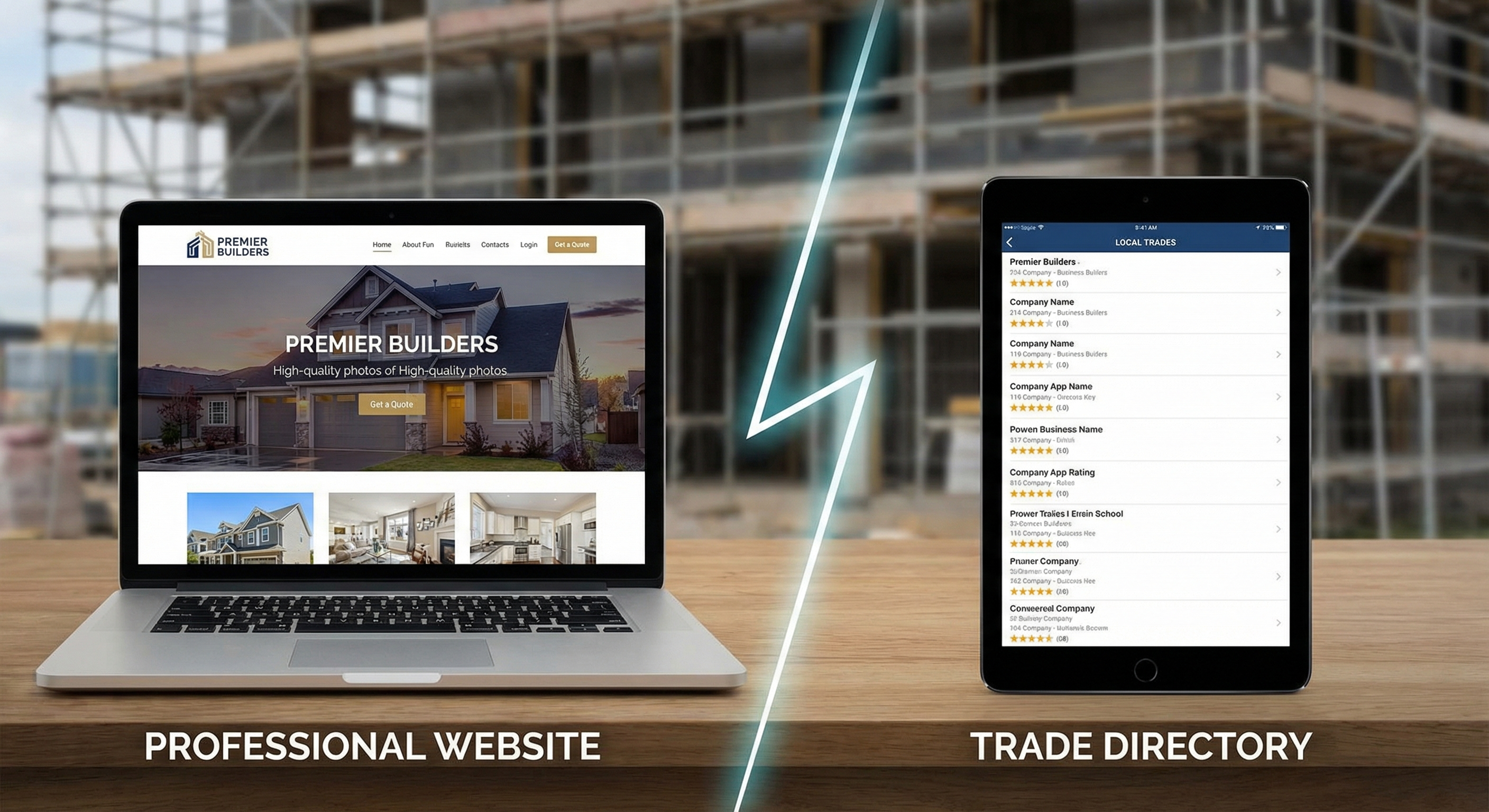
If you're a builder trying to decide between investing in a website or sticking with Checkatrade, you're asking the right question. Both can bring in work, but they do it very differently — and for builders specifically, the differences are even more important than for other trades.
Here's the honest comparison.
How Checkatrade Works for Builders
Checkatrade lists you in their directory alongside other builders in your area. Homeowners search for a builder, see your profile, read your reviews, and get in touch if they like what they see.
The good:
- Instant visibility to homeowners actively searching for builders
- The Checkatrade brand is trusted — customers feel safer using vetted tradesmen
- Reviews and vetting status help build credibility
- Easy to set up — no technical skills needed
The not so good:
- You're on the same page as every other builder in your area
- Customers compare you side-by-side with competitors before they even call
- You pay monthly whether leads come in or not
- Limited space to showcase your work — building projects need more than a few small photos
- You have no control over the platform. Pricing changes, layout changes, algorithm changes — all out of your hands
How Your Own Website Works
Your website lives on Google. When someone searches "extension builder in Manchester" or "loft conversion Sheffield," your website can appear in the search results. When they click, they see your portfolio, your services, and your reviews — with no competitors alongside you.
The good:
- Full control over how your work is presented — proper project galleries, before-and-after photos, detailed case studies
- No competitors on the page
- SEO traffic builds over time — the longer your site is live, the more visible it becomes
- You can rank for specific services like "loft conversions," "house extensions," or "garage conversions"
- One-time cost with minimal ongoing fees
- Works as the hub for all your marketing
The not so good:
- Takes time to build organic traffic — usually 3-6 months for local search terms
- Requires an upfront investment
- Needs occasional content updates
Why Builders Especially Need a Website
Here's the thing that separates builders from most other trades: your projects are big, expensive, and visual. A homeowner hiring an electrician might spend £200 on a consumer unit. A homeowner hiring a builder could be spending £40,000 on a loft conversion.
That means they research more carefully. They want to see examples of similar projects. They want to browse a portfolio of extensions, conversions, and renovations. They want reassurance that you can handle a project of that scale.
Checkatrade gives you a handful of small photos on a profile page. A builder website gives you a full-screen portfolio with project galleries, descriptions of the work involved, and before-and-after transformations. For builders, this visual showcase is often what tips the customer from "maybe" to "I'm calling them."
Cost Comparison Over a Year
Checkatrade:
- Monthly membership: roughly £60-120/month depending on your area
- Annual cost: £720-£1,440/year
- Still competing for every lead against other builders
Your own website:
- One-time build: £497 for a hand-coded, SEO-optimised builder website
- Domain renewal: £10-15/year
- Hosting: included
- First year total: around £510
- Every year after: roughly £15
The maths is clear. After year one, your website costs next to nothing while Checkatrade keeps billing you every month.
Lead Quality
Checkatrade leads are often shared. A homeowner posts a job, and multiple builders get the opportunity. You're competing on price and response speed before you've even had a conversation. For big building projects, this price-race dynamic can push margins down significantly.
Website leads are exclusive to you. Someone has searched Google, found your site, looked through your portfolio, and decided to contact you specifically. They've already chosen you in their head — they just want to confirm details and pricing. These leads convert at a much higher rate and you can charge what your work is worth.
For builders, where project values are high, the difference between shared and exclusive leads can be worth thousands of pounds per job.
The Compound Effect
Checkatrade is like hiring a van. You pay every month, and when you stop, you've got nothing. Your listing disappears and your reviews stay on their platform.
A website is like buying equipment. You invest once, and the value increases over time. Your domain gains authority. Blog posts bring in traffic for years. Your portfolio grows as you add more projects. After 12 months, your website is working harder than it did on day one.
This compound growth is particularly powerful for builders. Every completed project adds to your portfolio. Every blog post about extensions or conversions targets a new keyword. The site becomes a snowball that gains momentum the longer it runs.
The Verdict
If you're a builder choosing between the two, a website should come first. The ability to properly showcase your projects, the better lead quality, and the long-term cost savings make it the clear winner.
But the ideal setup is both. Use Checkatrade for immediate visibility while your website builds organic traffic. Link your website from your Checkatrade profile — builders with websites look more professional, and customers click through to see more of your work.
The smart strategy:
- Get a website built with a proper project portfolio
- Link it from Checkatrade to boost credibility
- Use it as a landing page for Google Ads when you're ready to invest in paid traffic
- Keep adding projects to your portfolio — each one makes the site more convincing
- Let SEO build over time — within 6-12 months, organic traffic may let you reduce your Checkatrade spend
If you want a professional builder website with a portfolio that sells your work, we can have you online in 7 days. One-time payment of £497, no monthly fees, hand-coded by a developer who understands what builders need.

Is Your Website Winning You Work?
21 practical checks across 5 categories. Score yourself and see where you stand — takes 5 minutes.
Get the Free Checklist →